Segmental Retaining Walls | Outdoor Spaces
Segmental retaining walls are one of the most effective solutions for managing changing elevations, sloping landscapes, and Georgia’s expansive clay soils on residential and commercial properties throughout Metro Atlanta and North Georgia. Without proper slope stabilization and drainage, these conditions contribute to soil movement, erosion, standing water, and unusable outdoor spaces.
Segmental retaining walls provide an attractive, durable solution that not only controls grade changes but also enhances the appearance and functionality of a property. Outdoor Spaces designs and constructs professionally engineered retaining wall systems that blend structural performance with landscape aesthetics.
Our segmental block retaining wall services include retaining wall contractors, retaining wall installation, retaining wall repair, and retaining wall repair costs, providing property owners with helpful information and professional solutions for their retaining wall needs. Whether you’re creating a level, landscaped backyard for entertaining, halting erosion, or improving a commercial property’s appearance, today’s modular retaining wall systems offer exceptional versatility and long-term value.
What Are Segmental Retaining Walls?
Segmental retaining walls are engineered wall systems constructed from individual interlocking concrete retaining wall blocks that work together to resist the pressure of retained soil. Unlike poured concrete walls that rely on a continuous reinforced concrete structure, or timber walls that use pressure-treated lumber, modular block systems achieve their strength through the weight of the blocks, proper installation techniques, and, when required, engineered reinforcement.
The blocks are manufactured with precision to create consistent dimensions, allowing installers to build straight walls, sweeping curves, terraces, raised planting beds, seating walls, and other landscape features with a clean, finished appearance.
Depending on the height of the wall and site conditions, these systems function in one of two ways:
- Gravity retaining walls, which rely primarily on the weight and setback of the blocks to resist soil pressure.
- Reinforced retaining walls, which incorporate geogrid reinforcement extending into the compacted backfill to create a much larger stabilized soil mass capable of supporting greater loads.
This engineering flexibility makes segmental retaining walls suitable for everything from decorative landscape borders to large structural retaining walls supporting driveways, parking lots, roads, and commercial developments.
Compared with other retaining wall materials, modular block systems offer several advantages:
- Greater design flexibility than poured concrete
- Longer service life than many timber walls
- More consistent construction than stacked natural stone
- Attractive architectural finishes
- Excellent drainage characteristics
- Easier repair if individual blocks become damaged
- Wide availability of colors, textures, and styles
These benefits have made modular retaining wall systems one of the most popular choices for modern residential and commercial landscape construction.
Contact Outdoor Spaces
Ready to transform your property with a professionally designed retaining wall? Contact Outdoor Spaces at (770) 880-3405 to schedule a consultation. We’ll evaluate your property, discuss your goals, and recommend the retaining wall solution that best fits your landscape, budget, and long-term needs. Whether you’re addressing erosion, creating usable outdoor living space, or enhancing your property’s appearance, our experienced team is here to help you bring your vision to life.
Table of Contents
Benefits of Segmental Retaining Walls
Segmental retaining walls combine structural performance with attractive design, making them a popular choice for residential and commercial landscapes. Instead of serving only as functional structures, they enhance curb appeal while stabilizing changing elevations.
Exceptional Structural Strength
Properly designed retaining walls stabilize slopes and resist soil pressure, providing dependable support for changing elevations. Reinforced systems can accommodate steeper grade changes and heavier loads when engineered for site conditions.
Attractive Appearance
Modern retaining wall blocks are available in a wide range of architectural styles, including:
- Split-face textures
- Tumbled finishes
- Smooth contemporary blocks
- Natural stone-inspired textures
- Earth-tone color blends
- Decorative wall caps
These options allow retaining walls to complement virtually any home or landscape design, seamlessly integrating with patios, gardens, walkways, and surrounding hardscapes.
Outstanding Design Flexibility
Segmental retaining walls easily incorporate features such as:
- Curved walls
- Terraced landscapes
- Raised planting beds
- Stairways
- Seating walls
- Landscape lighting
- Outdoor living spaces
This flexibility allows the retaining wall to become an integral part of the overall landscape design.
Long Service Life
Manufactured concrete retaining wall blocks are designed to withstand weather, moisture, and Georgia’s seasonal conditions. With proper base preparation, drainage, and reinforcement when needed, they provide decades of dependable performance with minimal maintenance.
Excellent Drainage Performance
Unlike solid concrete walls, modular retaining wall systems work with gravel backfill and perforated drain pipe to move water efficiently and reduce hydrostatic pressure—one of the leading causes of retaining wall failure. Proper drainage also minimizes soil saturation, reduces erosion behind the wall, extends structural life, and helps maintain long-term stability during Georgia’s heavy seasonal rainfall.
Low Maintenance
Routine maintenance generally consists of inspecting drainage outlets, removing debris, monitoring vegetation, and occasionally cleaning the wall to preserve its appearance.
Unlike many other retaining wall materials, segmental retaining walls require no painting, staining, or sealing, making them a durable, low-maintenance solution that continues to perform and look attractive with minimal upkeep for decades.
Best Applications for Segmental Retaining Walls
Because of their versatility, segmental retaining walls are widely used throughout Metro Atlanta and North Georgia in a wide variety of landscape and site development projects. Their modular design allows them to adapt to changing elevations, challenging terrain, and properties of virtually any size. Whether supporting sloped yards, stabilizing commercial sites, reducing erosion, or creating usable outdoor spaces, segmental retaining walls combine structural performance with architectural appeal.
Residential Sloped Lots
Retaining walls transform steep yards into level, usable areas for patios, lawns, gardens, playgrounds, and outdoor entertaining while improving accessibility. Well-designed ramps and sloped pathways offer accessible site circulation.
Commercial Properties
Commercial retaining walls provide structural support while maximizing usable land for office buildings, retail centers, apartment communities, schools, churches, medical facilities, industrial sites, and municipal projects.
Outdoor Living Spaces
Segmental retaining walls can be seamlessly integrated with paver patios, outdoor kitchens, fire pits, seating walls, walkways, and architectural landscape lighting to create attractive, functional outdoor living spaces.
Parking & Driveways
Retaining walls support elevated driveways, parking lots, and access roads where dependable structural performance, proper drainage, and engineered construction are essential. for life and safety.
Concrete Block Styles, Colors, and Design Options
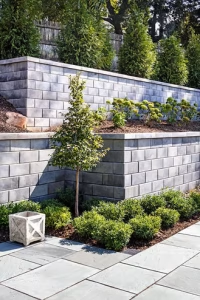
One reason segmental retaining walls remain so popular is the variety of styles available. Modern retaining wall blocks are manufactured in numerous colors, textures, and profiles to complement almost any architectural style.
Popular Styles
- Split-face blocks with a quarried stone appearance
- Tumbled blocks that resemble weathered stone
- Smooth contemporary blocks for modern architecture
- Natural stone-look concrete products
Design Features
“Most segmental retaining wall (SRW) systems are suitable for straight or curved walls, corners, and stairs, and they provide the ideal way to accommodate grade changes in any landscape or garden project.” (Source) Modern retaining wall systems can also incorporate:
- Curved walls
- Multi-level terraces
- Decorative caps
- Corner units
- Stairways
- Raised planters
- Seat walls
- Columns and entry features
- Integrated landscape lighting
These architectural options allow retaining walls to serve as both structural necessities and attractive landscape features.
Gravity Walls vs. Reinforced Segmental Retaining Walls
Not all segmental retaining walls are designed the same. The appropriate wall system depends on factors such as wall height, soil conditions, drainage, surcharge loads, and the intended application.
Understanding the difference between gravity retaining walls and reinforced segmental retaining walls helps explain why proper engineering and professional installation are essential for long-term performance.
Gravity retaining walls rely primarily on the weight of the retaining wall blocks and their built-in setback to resist the pressure of the retained soil. These walls are commonly used for landscape borders, raised planting beds, small residential retaining walls, and projects involving minor changes in elevation. Because gravity walls depend on their own mass for stability, they are generally limited in height before additional engineering or reinforcement becomes necessary.
Reinforced segmental retaining walls are designed for larger, more demanding applications. When walls become taller or must support heavier loads, high-strength geogrid reinforcement is installed between selected courses of retaining wall block and extended deep into compacted backfill. This creates a reinforced soil mass that significantly increases the wall’s structural capacity and overall stability. Reinforced retaining walls are commonly used to stabilize steep slopes, construct tall retaining walls, support driveways and parking lots, create building pads, and accommodate commercial developments.
They are also the preferred solution for challenging soil conditions, including Georgia’s expansive clay soils, and for locations where surcharge loads from buildings, roadways, swimming pools, or other heavy structures place additional pressure on the retaining wall.
The Role of Engineering in Segmental Retaining Wall Design
The need for engineering is determined by far more than wall height alone. Engineers evaluate factors such as soil composition, foundation stability, drainage conditions, existing slopes, anticipated loads from vehicles or nearby structures, water management, and local building code requirements. By considering these site-specific conditions, professional engineering helps ensure a segmental retaining wall performs safely, remains structurally sound, and provides reliable service for decades.
Drainage Requirements
Proper drainage is one of the most important factors in the long-term performance of a segmental retaining wall. Georgia’s heavy rainfall and expansive clay soils can create hydrostatic pressure behind a wall, leading to bulging, leaning, cracking, settlement, or failure if water is not effectively managed. A properly designed drainage system typically includes clean gravel backfill to allow water to flow freely, a perforated drain pipe to collect and discharge groundwater, filter fabric to prevent soil from clogging the drainage stone, and proper surface grading to direct runoff away from the wall. Depending on site conditions, downspouts, swales, French drains, and underground drainage systems may also be incorporated to safely manage stormwater and protect both the retaining wall and surrounding property.
Construction Process
A long-lasting retaining wall depends on careful planning and quality segmental block retaining wall installation —not simply stacking concrete blocks. Every phase contributes to the wall’s appearance, stability, and durability.
Site Evaluation: The project begins with an evaluation of grades, soil conditions, drainage, utilities, site access, nearby structures, and the wall’s intended purpose.
Excavation: The installation area is excavated to accommodate the compacted base, drainage materials, and retaining wall system.
Foundation Preparation: A compacted aggregate base is installed to provide stable support and help prevent future settlement. “There are two primary areas of concern for any earth-retaining structure: resisting lateral earth pressures; and providing a strong foundation.” (Source: Extremehowto)
Base Compaction: Each lift of base material is thoroughly compacted to achieve long-term structural performance.
Block Installation: The first course is carefully leveled because every additional course depends on it. Remaining segmental blocks are installed according to manufacturer specifications to maintain proper setback and alignment.
Geogrid Installation: When reinforcement is required, geogrid is installed between designated block courses and extended into compacted backfill according to engineered plans.
Drainage Installation: Perforated drain pipe, gravel backfill, filter fabric, and related drainage components are installed throughout construction to manage water efficiently.
Backfill and Compaction: Backfill is placed in controlled lifts and compacted incrementally to strengthen the wall and minimize future settlement.
Final Grading and Cleanup: The finished landscape is graded to direct water away from the wall, followed by site cleanup and preparation for landscaping or additional outdoor living features.
Maintenance and Long-Term Performance
When professionally designed and installed, segmental retaining walls provide decades of reliable performance with minimal maintenance, requiring only periodic inspections, drainage maintenance, vegetation control, and occasional cleaning. Unlike timber walls, concrete retaining wall blocks resist rot and insect damage, and individual blocks can often be replaced without rebuilding the entire wall if repairs are ever needed.
Retaining Wall Construction Cost Factors
Every retaining wall project is unique, and several variables influence the overall investment. Rather than offering one-size-fits-all pricing, professional contractors evaluate the specific conditions of each property to recommend the most appropriate retaining wall cost solution.
Wall Height and Length: Larger walls require additional materials, labor, excavation, and, in many cases, structural engineering and reinforcement.
Soil Conditions: Georgia’s expansive clay soils may require additional excavation, improved base preparation, or engineered reinforcement to ensure long-term stability.
Excavation Requirements: Steep slopes, tree roots, existing retaining walls, underground utilities, and limited site access can increase project complexity.
Drainage Systems: Proper water management—including gravel backfill, perforated drain pipe, filter fabric, grading improvements, and supplemental drainage—is essential for long-term wall performance.
Geogrid Reinforcement: When required by engineering, geogrid reinforcement increases structural capacity. The amount used depends on wall height, soil conditions, and anticipated loading.
Site Accessibility: Restricted access for equipment, material delivery, or construction crews may affect installation methods, scheduling, and labor requirements.
Material Selection: Retaining wall blocks are available in numerous styles, colors, textures, and cap systems. Material selection influences both the finished appearance and the overall project cost.
Engineering and Permits: Some retaining walls require engineered drawings, structural calculations, or local permits based on wall height, loading conditions, and municipal requirements.
Why Professional Installation Matters
Although retaining wall blocks are readily available, building a retaining wall that performs reliably for decades requires proper engineering, site preparation, and construction techniques.
Professional retaining wall contractors evaluate soil conditions, slopes, drainage, hydrostatic pressure, foundation preparation, compaction, structural loading, reinforcement requirements, local building codes, and long-term site performance.
By combining proper excavation, aggregate base installation, drainage, compaction, and reinforcement, experienced contractors construct retaining walls that resist settlement, leaning, bulging, and premature failure while providing long-lasting structural stability and protecting your investment.
Communities We Serve
Our service areas throughout Metro Atlanta and North Georgia include Buford, Johns Creek, Lawrenceville, Sugar Hill, and Suwanee, providing professional segmental block retaining wall solutions for residential and commercial properties in these communities.
Contact Outdoor Spaces
Contact Outdoor Spaces by telephone to (770) 880-3405 to schedule a consultation and discover how a professionally designed retaining wall can transform your landscape. If you’re planning a retaining wall project or would like expert guidance on the best solution for your landscape, contact Outdoor Spaces today to schedule a consultation.
Frequently Asked Questions (FAQs)
What are the advantages of segmental retaining walls compared to poured concrete walls?
Segmental retaining wall systems offer greater design flexibility, easier repairs, excellent drainage characteristics, and a wide variety of colors and textures. They also accommodate slight ground movement better than rigid poured concrete walls, making them well suited to many residential and commercial applications.
When is geogrid reinforcement required?
Geogrid reinforcement is typically used when retaining walls exceed certain heights or must support additional loads from driveways, buildings, parking areas, or steep slopes. The need for reinforcement depends on engineering calculations, soil conditions, wall height, and local building requirements.
Do retaining walls need drainage systems?
Yes. Proper drainage is essential for nearly every retaining wall. Gravel backfill, perforated drain pipe, filter fabric, and proper grading help relieve hydrostatic pressure that could otherwise lead to movement or structural failure.
Can retaining walls increase property value?
Many retaining wall projects improve both the appearance and functionality of a property by creating usable outdoor space, controlling erosion, improving drainage, and enhancing curb appeal. While every property is different, professionally designed retaining walls are often viewed as valuable landscape improvements.
Call (770) 880-3405 to schedule a site visit and receive professional advice about your landscaping design and installation plans.