Natural Stone Retaining Walls | Outdoor Spaces
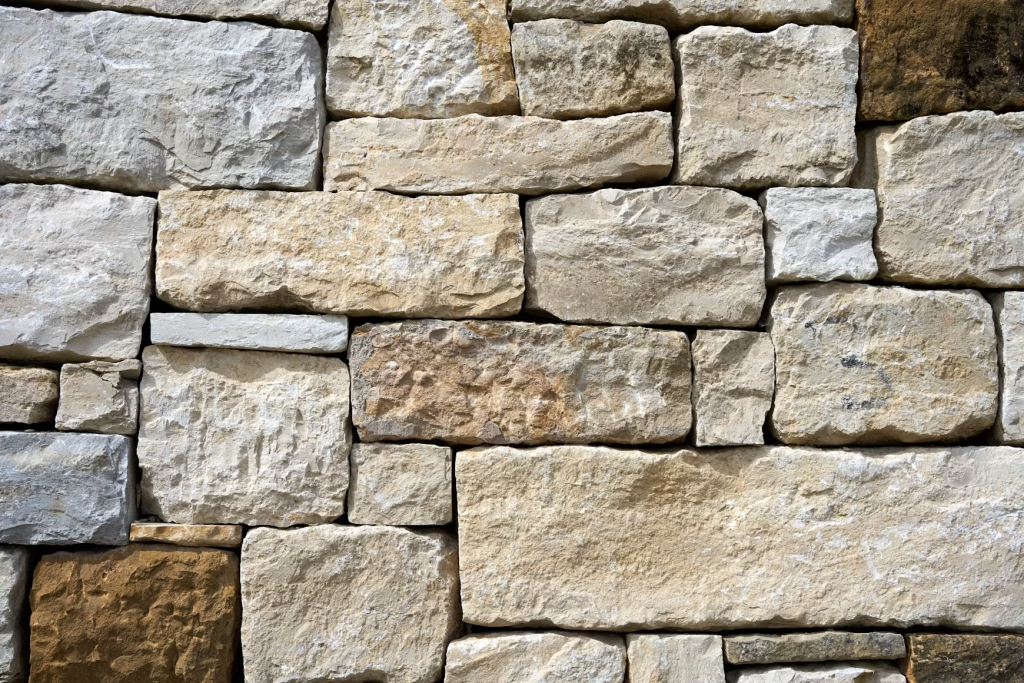
Few landscape features combine structural performance and visual appeal as successfully as natural stone retaining walls. From gently terraced gardens to large hillside stabilization projects, stone has been used for centuries to manage changing elevations while creating landscapes that remain attractive for generations.
Unlike manufactured building materials, natural stone offers one-of-a-kind textures, colors, and patterns formed over thousands of years. Every retaining wall possesses its own unique character, making natural stone an excellent choice for homeowners and property managers seeking a landscape that feels both elegant and timeless.
Throughout Metro Atlanta and North Georgia, changing elevations, rolling hills, and Georgia’s clay-rich soils frequently create erosion, drainage, and slope stability challenges. Properly designed natural stone retaining walls help address these conditions by supporting soil, directing water, reducing erosion, and creating level areas for patios, gardens, walkways, and outdoor living spaces.
Natural stone is equally appropriate for residential and commercial applications. Homeowners often choose it to enhance curb appeal, build terraced gardens, or frame outdoor entertaining areas, while commercial properties, parks, churches, and neighborhood entrances benefit from its durability and upscale appearance.
This guide explains the advantages of natural stone retaining walls, compares different construction methods, discusses maintenance and drainage considerations, and helps property owners determine whether natural stone is the right solution for their landscape.
Although stone is admired for its beauty, successful retaining wall construction involves much more than stacking rocks. Foundation preparation, drainage, grading, backfill, and construction techniques all contribute to the wall’s long-term structural integrity.
Explore our complete range of retaining wall solutions, including Timber Retaining Walls, Segmental Retaining Walls, Concrete Block Retaining Walls, Poured Concrete Retaining Walls, and Natural Stone Retaining Walls, to find the best option for your property, budget, and landscape.
What Are Natural Stone Retaining Walls?
Natural stone retaining walls are structures built from quarried stone to hold back soil where the landscape changes elevation. In addition to preventing erosion and stabilizing slopes, they create attractive transitions between different areas of a property while adding lasting architectural interest.
Unlike manufactured concrete blocks, natural stone is shaped by geological processes rather than molds. Variations in color, texture, size, and surface character give every wall a distinctive appearance that blends naturally into the surrounding environment.
Depending on the project, retaining walls may be constructed using large dimensional stone, fieldstone, granite, limestone, sandstone, boulders, or natural stone veneer over structural concrete. Each material offers a distinct appearance and is selected based on the wall’s structural requirements, architectural style, and budget.
Some natural stone retaining walls are carefully dry-stacked without mortar, relying on gravity, stone placement, and craftsmanship for stability. Others are mortared to create a rigid structural wall capable of supporting greater loads or achieving a more formal architectural appearance.
Modern retaining wall construction often combines traditional masonry techniques with contemporary engineering principles. Larger walls may incorporate reinforced foundations, engineered drainage systems, geogrid reinforcement, and compacted backfill to improve long-term performance while preserving the timeless appearance of natural stone.
The result is a retaining wall that not only performs an essential structural function but also becomes a permanent landscape feature that enhances the property’s overall character.
Contact Outdoor Spaces
Whether you’re stabilizing a hillside, creating terraced gardens, enhancing an outdoor living area, or replacing an aging retaining wall, Outdoor Spaces designs and builds natural stone retaining walls throughout Metro Atlanta and North Georgia. We evaluate grading, drainage, soil conditions, and your property’s style to recommend the best solution. Contact Outdoor Spaces today via (770) 880-3405 to schedule a consultation and enhance the beauty, stability, and value of your landscape.
Table of Contents
Benefits of Natural Stone Retaining Walls
Among today’s retaining wall options, natural stone retaining walls remain one of the most desirable choices because they successfully combine beauty, durability, and long-term value.
Timeless Appearance
Natural stone possesses a character that manufactured materials simply cannot duplicate. Each stone contains unique variations in color, texture, shape, grain and surface weathering.
These natural variations create retaining walls with depth, warmth, and visual interest that often improve with age.
Whether paired with traditional homes, mountain-inspired architecture, historic properties, or contemporary outdoor living spaces, natural stone complements a wide range of landscape styles.
Exceptional Durability
Stone is one of the most durable construction materials available. When properly designed and installed, natural stone retaining walls can provide dependable performance for many decades while resisting weather, moisture, ultraviolet exposure, and seasonal temperature changes.
Unlike wood, stone is not susceptible to rot or insect damage. Unlike painted materials, it requires no refinishing to maintain its appearance.
Environmental Compatibility
Stone blends naturally into Georgia’s landscapes. Throughout North Georgia, where mature hardwoods, rolling terrain, and exposed granite outcroppings are common, natural stone often appears as though it has always belonged on the property.
This visual harmony makes it especially popular for estate homes, wooded lots, parks, and churches.
Design Flexibility of Natural Stone Walls
Walls may be designed to appear rustic and informal or highly refined depending on the stone selected and the installation method. Natural stone adapts well to a wide variety of landscape projects, including:
Garden Terraces
Entry Features
Pool Landscapes
Outdoor Kitchens
Fire Pit Areas
Walkways
Hillside Stabilization
Commercial Developments
Best Applications for Natural Stone Retaining Walls
Because of their durability and timeless appearance, natural stone retaining walls are suitable for a wide variety of landscape projects throughout Metro Atlanta and North Georgia.
Residential Sloped Lots
Natural stone is frequently incorporated into:
- Terraced backyards
- Outdoor living spaces
- Garden retaining walls
- Fire pit areas
- Pool landscapes
- Walkways and stairways
- Driveway entrances
- Hillside stabilization
Natural stone retaining walls complements both traditional and contemporary homes while creating outdoor spaces that feel permanent and well integrated with the surrounding landscape.
Commercial Properties
Commercial properties often benefit from natural stone because of its durability and upscale appearance. Common projects include:
- Office buildings
- HOA entrance monuments
- Apartment communities
- Churches
- Municipal landscapes
- Hotels
- Retail developments
Stone retaining walls require relatively little maintenance while providing an attractive first impression for visitors and customers.
Outdoor Living Spaces
Throughout North Georgia, many properties include significant elevation changes. Professionally designed natural stone retaining walls help transform difficult slopes into usable outdoor environments by creating:
- Level lawn areas
- Terraced gardens
- Expanded patios
- Safer walkways
- Improved drainage
- Better erosion control
Rather than viewing steep terrain as a limitation, homeowners can often use retaining walls to unlock additional usable space.
Outdoor Patios & Firepits
A natural stone wall creates a beautiful, functional border around your fire pit and patio while adding timeless character to your outdoor living space.
In addition to defining the space, the wall provides comfortable seating, enhances safety, and blends seamlessly with the surrounding landscape.
Professionally constructed for strength, proper drainage, and long-term durability, a natural stone wall will provide lasting beauty and enjoyment for decades.
Types of Natural Stone Used in North Georgia Retaining Walls
Several varieties of stone are commonly incorporated into natural stone retaining walls, each offering its own appearance and construction characteristics.
Granite Retaining Wall
Granite is among the most durable building stones available and is especially appropriate throughout Georgia because of the region’s abundant granite formations. Granite retaining walls offer:
- Exceptional strength
- Excellent weather resistance
- Long service life
- Natural gray, tan, and blue tones
- Minimal maintenance
Its durability makes granite suitable for both residential and commercial retaining wall projects.
Fieldstone Retaining Wall
Fieldstone provides a relaxed, traditional appearance with naturally rounded shapes and varied sizes. It is often selected for:
- Cottage landscapes
- Garden walls
- Historic homes
- Informal landscape designs
Each wall possesses a handcrafted appearance that reflects traditional stone masonry.
Limestone Retaining Wall
Limestone offers softer colors and a refined architectural appearance. Although less common in Georgia than granite, limestone may be selected when homeowners desire lighter earth tones and a more formal landscape aesthetic.
Sandstone Retaining Wall
Sandstone provides warm natural colors ranging from tan and gold to reddish-brown. Its layered appearance complements rustic architecture and outdoor living environments while creating attractive visual contrast within the landscape.
Boulder Retaining Walls
Large natural boulders create retaining walls with a rugged, organic appearance.
Because individual stones vary considerably in size and shape, boulder walls often appear to emerge naturally from the landscape rather than being intentionally constructed. These walls are particularly well suited for:
- Large properties
- Hillsides
- Wooded landscapes
- Drainage swales
- Naturalized environments
Selecting the appropriate stone depends on far more than appearance alone. Structural requirements, available space, drainage conditions, installation methods, and the desired architectural style all influence the most suitable material for a particular project.
Dry-Stack vs. Mortared Stone Retaining Walls
One of the first decisions in designing natural stone retaining walls is whether the wall should be constructed using a dry-stack or mortared method. Both approaches have been used successfully for generations, but each offers distinct advantages depending on the project’s structural requirements, appearance, and site conditions.
Dry-Stack Stone Retaining Walls
Dry-stack walls are built by carefully placing individual stones without mortar. Stability comes from the weight of the stone, thoughtful stone placement, proper wall batter (a slight backward lean), and a well-prepared foundation.
Many homeowners appreciate the craftsmanship required for dry-stack construction. An experienced mason carefully selects and positions each stone so the wall appears balanced while distributing weight evenly throughout the structure. Advantages of dry-stack construction include:
- Natural, timeless appearance
- Excellent drainage through the stone joints
- Flexibility to accommodate minor ground movement
- Simplified repairs if individual stones require adjustment
- Strong visual compatibility with wooded and rural landscapes
Because water can pass through the wall more easily, dry-stack systems naturally reduce hydrostatic pressure when combined with proper drainage stone and backfill.
Mortared Stone Retaining Walls
Mortared natural stone retaining walls use masonry mortar to bond stones together into a more rigid structure. Depending on the design, the visible natural stone may form the structural wall itself or serve as a veneer over reinforced concrete. Mortared construction is often selected when homeowners desire:
- A more formal architectural appearance
- Clean, consistent joint lines
- Increased structural rigidity
- Integration with traditional masonry architecture
Mortared walls are frequently found around luxury homes, commercial developments, entrance monuments, churches, and civic landscapes where a refined appearance is desired.
Regardless of the construction method, proper drainage, foundation preparation, and structural design remain essential for long-term performance.
Drainage Requirements for Natural Stone Retaining Walls
No retaining wall material—regardless of its strength—can perform reliably without proper drainage.
Although natural stone retaining walls are exceptionally durable, they must still withstand the pressure created by water trapped behind the wall.
Without adequate drainage, hydrostatic pressure can eventually contribute to:
- Wall movement
- Bulging
- Settlement
- Cracking in mortared walls
- Soil erosion
- Reduced structural performance
Professional retaining wall construction typically includes several drainage components working together.
Gravel Backfill
Free-draining aggregate placed immediately behind the retaining wall allows groundwater to move downward rather than becoming trapped in dense Georgia clay soils.
Perforated Drain Pipe
A perforated drain pipe installed near the base of the wall collects groundwater and directs it away before pressure develops.
Filter Fabric
Filter fabric separates native soils from drainage stone, helping prevent sediment from clogging the drainage system over time.
Surface Water Management
Effective grading also plays an important role. Downspouts, swales, French drains, and properly sloped landscapes help redirect surface runoff away from the retaining wall, reducing water infiltration behind the structure.
When these drainage components work together, they significantly improve the long-term performance of the retaining wall while helping protect nearby landscaping and hardscape features.
Natural Stone Retaining Wall Construction Process
Successful natural stone retaining walls begin long before the first stone is placed. Every project should start with a careful evaluation of:
- Existing grades
- Soil conditions
- Drainage patterns
- Wall height
- Intended use
- Nearby structures
- Utility locations
After planning is complete, construction typically follows several important steps.
Site Preparation
Vegetation, unstable soils, and unsuitable materials are removed to establish a stable construction area.
Excavation and Foundation Preparation
The wall foundation is excavated and filled with compacted aggregate to create a stable base capable of supporting the finished retaining wall. Foundation preparation is particularly important throughout Metro Atlanta, where expansive clay soils can experience seasonal movement as moisture levels change.
Wall Construction
Stone is placed carefully to distribute weight evenly while maintaining alignment, batter, and structural stability.
For taller or more demanding applications, engineered designs may incorporate reinforced concrete footings, geogrid reinforcement, or structural engineering to increase load-bearing capacity.
Backfill and Drainage Installation
Drainage stone, perforated pipe, and filter fabric are installed as construction progresses. Backfill is placed and compacted in controlled lifts to improve stability while minimizing future settlement.
Final Grading
Once construction is complete, surrounding grades are shaped to direct water away from the retaining wall while blending naturally into the existing landscape.
Cost Factors in Building a Natural Stone Retaining Walls
The investment in natural stone retaining walls depends on much more than the visible stone itself. Every property presents unique conditions that influence the scope of work, construction methods, and material requirements. Several factors affect the overall project cost.
Wall Height and Length: Larger retaining walls require additional excavation, foundation preparation, drainage materials, stone, labor, and, in some cases, engineering. Taller walls may also require geogrid reinforcement or reinforced concrete footings depending on the site’s conditions and loading requirements.
Stone Selection: Different varieties of natural stone vary in availability, size, shape, and installation complexity. Locally sourced stone may offer cost advantages, while specialty stone or hand-selected materials can increase the overall investment.
Site Conditions: Steep slopes, limited equipment access, mature trees, underground utilities, and difficult soil conditions all influence construction methods. Throughout Metro Atlanta and North Georgia, Georgia’s clay soils often require careful excavation, compaction, and drainage planning to provide a stable foundation.
Drainage and Erosion Control: Proper drainage is an essential part of every retaining wall project. Gravel backfill, perforated drain pipe, filter fabric, grading improvements, and erosion control measures all contribute to long-term structural performance and help protect your investment.
Craftsmanship: Unlike manufactured retaining wall systems with uniform dimensions, natural stone requires experienced craftsmanship. Each stone must be individually selected, positioned, and fitted to create a retaining wall that is both structurally sound and visually balanced. This attention to detail is one of the defining characteristics of professionally constructed natural stone retaining walls.
Although natural stone often represents a higher initial investment than some other retaining wall systems, many property owners consider its exceptional durability, timeless appearance, and minimal maintenance to provide outstanding long-term value.
Segmental, Concrete Block, Poured Concrete, and Timber Retaining Walls
Discover how a professionally designed retaining wall can transform your landscape. Explore our complete range of retaining wall solutions, in addition to natural stone retaining walls, including:
- Segmental Retaining Walls
- Concrete Block Retaining Walls
- Poured Concrete Retaining Walls
- Timber Retaining Walls
Contact Outdoor Spaces by telephone to (770) 880-3405 to schedule a consultation.
Communities We Serve
Our service areas throughout Metro Atlanta and North Georgia include Buford, Johns Creek, Lawrenceville, Sugar Hill, and Suwanee, providing professional segmental block retaining wall solutions for residential and commercial properties in these communities.
Contact Outdoor Spaces
Contact Outdoor Spaces by telephone to (770) 880-3405 to schedule a consultation and discover how a professionally designed retaining wall can transform your landscape.
Outdoor Spaces is one of Metro Atlanta’s experienced Atlanta retaining wall contractors, providing expert retaining wall installation, retaining wall repair, guidance on retaining wall repair costs, and detailed information about retaining wall details to help property owners choose the right solution. If you’re planning a retaining wall project or would like expert guidance on the best solution for your landscape, contact Outdoor Spaces today to schedule a consultation.
Frequently Asked Questions (FAQs)
- Are natural stone retaining walls stronger than concrete block walls?
Both systems can provide excellent structural performance when properly designed and installed. The best choice depends on wall height, loading requirements, site conditions, appearance preferences, and budget.
2. How long do natural stone retaining walls last?
Properly constructed natural stone retaining walls often remain functional for many decades and may last a century or more with appropriate drainage and periodic maintenance.
3. Do natural stone retaining walls require drainage?
Yes. Even though natural stone is highly durable, drainage is essential to relieve hydrostatic pressure behind the wall. Gravel backfill, perforated drain pipe, filter fabric, and proper grading all contribute to long-term performance.
4. Are natural stone retaining walls suitable for commercial properties?
Absolutely. Natural stone is frequently used for commercial developments, HOA entrances, churches, parks, office buildings, and municipal landscapes because of its durability, low maintenance, and premium appearance.
5. Are natural stone retaining walls worth the investment?
For many homeowners and property managers, yes. Although the initial cost is often higher than some other retaining wall systems, natural stone provides exceptional longevity, timeless beauty, minimal maintenance, and lasting value.
Call (770) 880-3405 to schedule a site visit and receive professional advice about your natural stone wall design and installation plans.